
Creosote
Creosote: what builds up in a chimney and how to keep it down
Creosote is the residue wood smoke leaves on the inside of a chimney. The Chimney Safety Institute of America (CSIA) describes it as crusty and flaky, tar-like and sticky, or shiny and hardened, and it burns. Every wood fire makes some. The aim is to make less of it and remove it before it builds up.
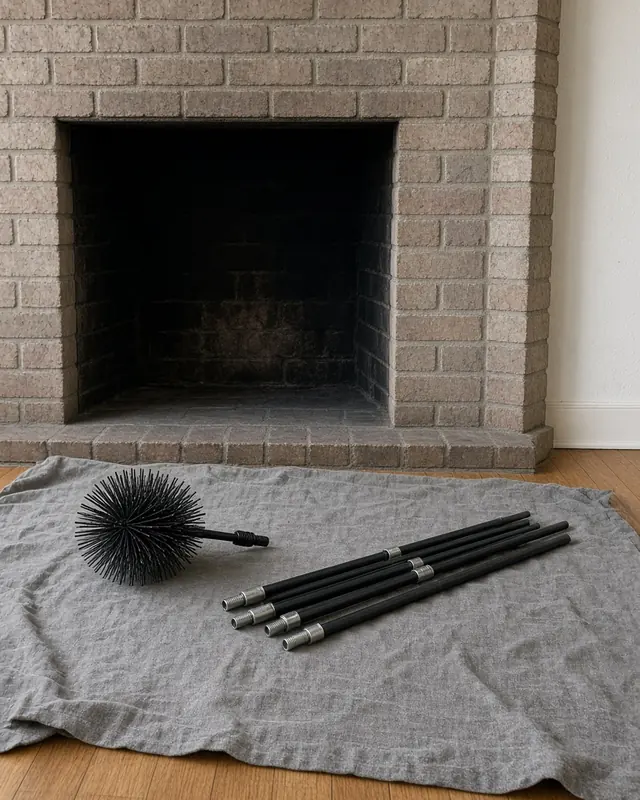
What is chimney creosote?
When wood burns, not everything in it turns to heat and gas. Water, tar and unburned particles leave the fire in the smoke. As that smoke rises through a cooler flue, part of it condenses on the liner wall, just as steam condenses on a cold window. What sticks is creosote, mixed with ordinary soot. The cooler the flue and the smokier the fire, the more of it forms. The Fort Worth Fire Department calls it an unavoidable product of wood-burning stoves and fireplaces.
The three forms of creosote
Flaky
Dry, crusty and powdery, the easiest form to brush out. A regular sweep clears it.
Sticky
Tar-like and drippy, often from smoldering fires or wet wood. Harder to brush and a sign that burning habits need a look.
Glazed
Shiny and hardened, like a coat of varnish on the flue. It does not come off with a brush, and CSIA says to sweep sooner when any glaze is present.
These are descriptions, not official stages: CSIA does not number them, and a single flue can hold all three at different heights. What matters is which forms the inspection finds and how thick they are.
Why creosote matters
Creosote is fuel. When enough builds up and a hot fire reaches it, it can ignite inside the flue, which is a chimney fire. In the U.S. Fire Administration's report on residential heating fires for 2017 to 2019, fires confined to chimneys, flues or fuel burners made up 77 percent of an estimated 34,200 heating fires a year. The EPA's Burn Wise program attributed three of every ten home-heating house fires to poorly maintained fireplaces and dirty chimneys. Keeping deposit down is the reason for the yearly inspection that NFPA 211 calls for.
How to make less creosote
- Burn dry wood. The EPA's Burn Wise pages say properly dried firewood reads 20 percent moisture or less on a moisture meter. Season softwood about six months and hardwood at least a year, split, stacked off the ground and covered on top. In the Bay Area, the Air District's rule defines seasoned wood the same way: 20 percent moisture or less by weight.
- Burn hot, not slow. A small, bright fire with plenty of air sends warmer smoke up the flue. Damping a stove right down to smolder overnight cools the smoke and coats the flue.
- Never burn trash, cardboard, painted or treated wood. Wood is the fuel a fireplace or stove is built for; anything else changes what ends up in the flue.
- Use a liner sized to the appliance. An oversized flue keeps smoke slow and cool. Our chimney liner guide covers sizing and insulation.
- Consider an EPA-certified stove or insert. The EPA says certified stoves can be up to 50 percent more efficient and use about a third less wood than older ones.
How creosote is removed
Flaky and most sticky deposit comes out with the brushes and vacuum of a standard sweep. CSIA's rule of thumb for an open masonry fireplace is to sweep at 1/8 inch of sooty buildup, sooner if glaze is present; for a factory-built fireplace, at any appreciable buildup. Glazed creosote is a separate job: it is treated with products that change it into a form that can be brushed out, or removed with rotary tools. Expect that to be named on the quote as its own item. Our chimney sweep guide covers the visit, and our post on how often a chimney should be swept covers timing.
Creosote-removing logs and powders sold for home use may loosen some deposit, but they do not replace an inspection, because they cannot tell you what is in the flue or whether it is damaged.
Signs of a chimney fire, and what to do
A chimney fire can be loud, with a roaring sound and dense smoke from the top of the chimney, or quiet enough to go unnoticed. If you think one is happening, get everyone out of the house and call 911. Do not stay to fight it.
Afterwards, CSIA's advice is not to use the chimney until it has been swept and evaluated by a qualified chimney professional. A chimney fire can crack liner tiles and open mortar joints without any sign in the room. A Level 2 inspection is the one called for after an event like this. If you suspect a past chimney fire you did not notice at the time, tell the inspector so they look for it. Our post on the signs of a chimney fire lists the nine clues CSIA names.
Creosote
Worried about creosote in the flue?
Tell us what you see at the fireplace or chimney. We call or email you back about the kind of visit you need; the request is free.
Ask about creosote in your chimney
A few lines are enough: what kind of fireplace or stove you have, what you are noticing, and the city or ZIP. We call or email you back about the visit you need; sending this costs nothing.
Creosote questions
Does burning pine cause more creosote than oak?
Moisture matters far more than species. Softwood like pine dries faster, about six months by the EPA's guidance against a year or more for hardwood. Dry pine burned hot leaves less deposit than wet oak smoldering, so check firewood with a moisture meter rather than going by species.
Do gas fireplaces produce creosote?
No. Creosote comes from burning wood and other solid fuel. Gas appliances still need their vents inspected each year for blockage and corrosion, as the Consumer Product Safety Commission advises for every fuel-burning heating system.
Why does my fireplace smell bad in summer?
Creosote and soot give off a sour smell when the air is warm and humid, and stronger when rain gets into an uncapped flue. A sweep removes the deposit; a cap keeps rain out. Our chimney cap guide covers the second part.
Sources: CSIA, Preventing chimney fires, Homeowner resources and After a chimney fire; U.S. Fire Administration, Residential building heating fires 2017–2019 (December 2021); EPA Burn Wise, Facts, figures and safety tips and Energy efficiency (archived program pages); City of Fort Worth Fire Department, Wood stove and fireplace safety; Bay Area Air District, Regulation 6, Rule 3; U.S. Consumer Product Safety Commission, Home heating equipment.