
Chimney liners
Chimney liner: what lines the flue, and when it needs relining
A chimney liner is the inner wall of the flue: the clay tile, metal pipe or cast material that smoke and gases touch on their way out. It protects the masonry and framing from heat and corrosive deposits. Relining comes up when the old liner is cracked, missing, or the wrong size for a new appliance.
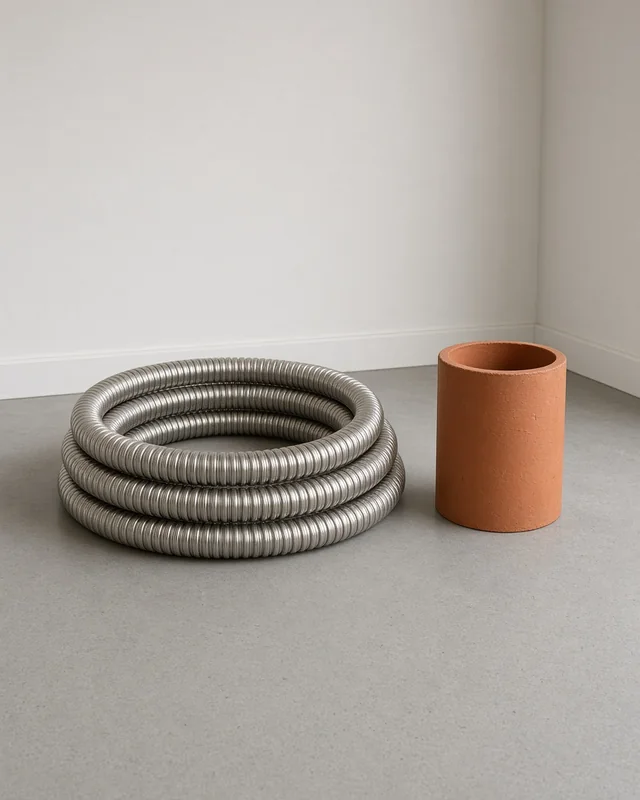
What does a chimney liner do?
Three things. It contains heat, so the brick and the wood framing around the chimney are not exposed to temperatures they were never meant to take. It resists the acidic condensation that smoke and combustion gases leave behind, which would otherwise eat into mortar joints from the inside. And it gives the smoke a smooth, correctly sized path, which is what makes a fire draw well and leaves less deposit behind.
When a liner fails, the danger is out of sight. The Chimney Safety Institute of America (CSIA) warns that clay (terracotta) liners can flake off under corrosive conditions; the pieces can partly block the flue and push combustion gases back into the house. That is why a cracked or flaking liner is a "stop and fix" finding, not cosmetic.
The three kinds of liner
Clay tile
Square or rectangular terracotta sections stacked inside a masonry chimney as it is built. Common in older homes. Durable when sound, but tiles can crack in a chimney fire or an earthquake, and the mortar joints between them can open.
Stainless steel
A round metal liner, rigid or flexible, slid down an existing chimney. The usual choice for relining and for connecting a wood stove, insert or gas appliance, because it is sized to the appliance.
Cast-in-place
A lightweight, cement-like mixture poured around a form inside the old flue, which hardens into a new smooth liner and can add strength to an old chimney.
Factory-built fireplaces are different again: their metal chimney is part of the listed unit made and tested by the manufacturer. Repairs to it use the maker's parts.
Why liners for wood need insulation
CSIA's homeowner guidance is that liners serving solid-fuel appliances, such as wood stoves and fireplace inserts, need to be insulated. Insulation keeps the flue gases warmer on the way up, which helps draft and means less smoke condenses into creosote on the liner wall. It also helps keep heat away from nearby framing. Ask any quote for a wood-burning liner how it is insulated: a wrap around the liner, or a poured insulating mix around it.
When does a chimney need relining?
A chimney needs relining when a camera inspection finds cracked, gapped or missing liner tiles, when a new stove, insert or gas appliance needs a flue made for it, or when the chimney was built with no liner at all.
- A damaged liner. Cracked, gapped or missing tiles found on a camera inspection, often after a chimney fire or an earthquake.
- A new appliance. A wood stove or insert usually needs a flue sized to its outlet. An old fireplace flue is often too large, which cools the smoke and builds creosote quickly.
- A change of fuel. Gas combustion gases condense differently from wood smoke; a flue built for wood may not suit a gas appliance without a liner made for it.
- No liner at all. Some very old chimneys were built without one.
Each of these is also a reason for a Level 2 inspection. CSIA's Level 2 procedure lists lining or relining as an occasion for one, because the liner's type and size depend on what the chimney really is along its full length, not on what shows from the firebox.
Questions to ask before you agree to relining
- Show me the damage. Stills or video from the camera run, with the height in the flue where each crack or gap is.
- What size and why? The liner diameter should match the appliance maker's instructions or the fireplace opening.
- What material and what insulation? Stainless steel grade, rigid or flexible, and the insulation method for wood or pellet use.
- What happens at the top and bottom? How the liner connects to the appliance or smoke chamber, and the top plate and cap that seal it.
- Is a permit needed? Installing an appliance and its liner may need a city permit; in California, ask for the contractor's license number and check it with CSLB.
Liners and the Bay Area wood-burning rule
Relining an existing fireplace is not, by itself, a reason to change what you burn. But if the work becomes part of a remodel that needs a building permit and costs over $15,000, the Bay Area Air District's Regulation 6, Rule 3 requires the result to be a gas-fueled, electric or EPA-certified device. Plan the appliance and the liner together. Our post on Bay Area wood-burning rules explains the rule.
Chimney liner
Wondering whether the flue needs relining?
Tell us what you see at the fireplace or chimney. We call or email you back about the kind of visit you need; the request is free.
Ask about a chimney liner
A few lines are enough: what kind of fireplace or stove you have, what you are noticing, and the city or ZIP. We call or email you back about the visit you need; sending this costs nothing.
Chimney liner questions
How do I know if my chimney has a liner?
Look up from the firebox with a flashlight past the open damper, or at the top of the chimney from the ground: a clay tile or a round metal pipe sticking up above the crown means there is a liner. Only a camera inspection shows whether it is whole along its length.
Can I use my fireplace with a cracked clay liner?
A cracked liner lets heat and gases reach the masonry and possibly the framing behind it, and loose pieces can block the flue. Treat it as a "do not use until assessed" finding and get a written recommendation with photos before lighting another fire.
Does a gas fireplace insert need a chimney liner?
Gas inserts vent through liners made for them, and their makers set the liner type and size in the installation instructions. Ask the installer which liner the instructions call for and to show you that page.
Sources: CSIA, Homeowner resources (insulated liners for solid fuel), Avoiding carbon monoxide hazards (clay liners flaking) and Level 2 inspection procedure (rev. April 5, 2019); Bay Area Air District, Regulation 6, Rule 3; CSLB, Description of classifications.