
Chimney sweeping
Chimney sweep: what a cleaning removes and when it is due
A chimney sweep brushes and vacuums the soot and creosote wood smoke leaves in the flue, smoke chamber and firebox. It is due when deposits build up, not by date: the Chimney Safety Institute of America (CSIA) says to sweep an open masonry fireplace at 1/8 inch of sooty buildup, and a factory-built fireplace at any appreciable buildup.
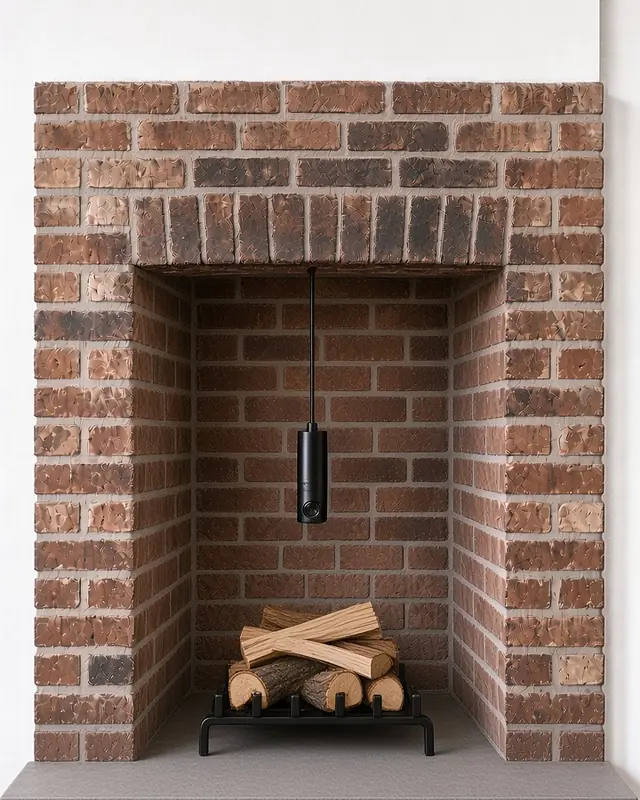
What does a chimney sweep actually remove?
Burning wood never turns all of it into heat. Part of the smoke cools on its way up and sticks to the inner walls of the flue. CSIA calls that residue creosote, and describes it in three forms: crusty and flaky, tar-like and sticky, or shiny and hardened. Mixed in with it is ordinary soot and fly ash. A sweep takes out all three, along with what has fallen in from above: leaves, twigs, a nest, broken pieces of a clay liner or mortar.
The parts that get cleaned are the firebox, where the fire burns; the damper, the metal flap that closes the flue; the smoke shelf and smoke chamber, the sloped space above the damper where the opening narrows into the flue; and the flue itself, up to the top. On a wood stove or insert, the connector pipe and the stove's own baffle area are part of the job as well.
Chimney sweeping, step by step
Scroll through the pictures below to see the usual order of a sweep: the hearth is protected, the flue is brushed clean, the firebox is inspected, and worn mortar joints are repaired where the inspection finds them. They are illustrations made with AI to show how this work usually goes, not photos of a real fireplace or a real job.
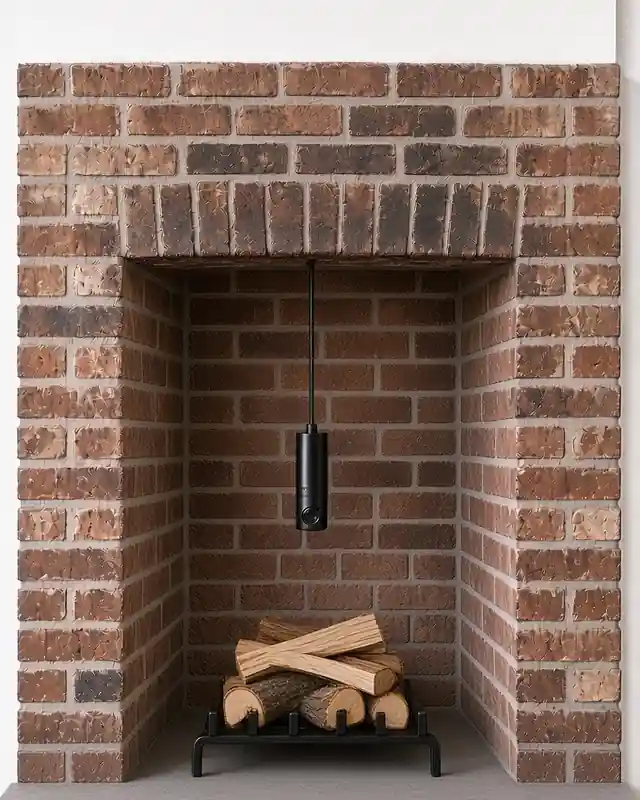
6 of 6
FinishedClean and ready
When does a chimney need sweeping?
When the deposit is there, which depends on how much you burn and how well. Two lines from the trade body set the threshold:
- Open masonry fireplace: sweep at 1/8 inch of sooty buildup in the flue, and sooner if any glaze is present: CSIA singles glaze out as the form that should not wait.
- Factory-built (prefab) fireplace: sweep when any appreciable buildup occurs. These have metal chimneys made and tested as a set with the firebox, and their makers expect a cleaner flue.
The yearly inspection is how you find out. NFPA 211, the national standard for chimneys and fireplaces, says they "shall be inspected at least once a year", and a sweep is booked when that look finds deposit. Owners who burn a fire most winter evenings often need a sweep every year; owners who light a few fires a season may go longer between sweeps while still having the yearly look. More on that balance is in our post on how often a chimney should be swept.
Signs it is time to book
- A strong, sour smell from the fireplace in warm or humid weather, when the deposit gives off its odor.
- Black flakes falling into the firebox, or a dark, glossy coating you can see on the damper or the throat with a flashlight.
- Fires that are harder to get going, or smoke that drifts into the room when it used to go up.
- Pieces of tile or mortar in the firebox, which point to a liner problem the sweep should report.
- No record of a sweep or inspection since you bought the house.
Smoke rolling into the room can also come from a closed damper, a cold flue, a house that is too airtight, or a blocked top. A sweep who finds the flue clean should say so and look for the real cause rather than clean it anyway.
What happens on the day
- Protect the room. Drop cloths in front of the hearth and a vacuum with a fine filter, so soot stays in the fireplace.
- Look before cleaning. A flashlight or camera view of the firebox, damper, smoke chamber and flue, so the starting condition is on record.
- Brush and vacuum. Rods and brushes sized to the flue, worked from below, above, or both; the loosened deposit is vacuumed out.
- Check again. A second look at the clean flue, where cracks and gaps that were hidden under soot become visible.
- Report. What was removed, what was seen, and whether anything needs a repair or a fuller inspection, in writing.
Glazed creosote that a brush cannot shift needs more than a standard sweep: chemical treatments that change it into a removable form, or rotary tools. That is a separate job and should be named as one on the quote.
How to check a chimney sweep before you book
Neither state treats sweeping on its own as a licensed trade in the way it treats building work. California's Contractors State License Board has no classification that names chimney sweeping, though repair work falls under licensed classes such as C-29 Masonry and C-61/D-34 for factory-built fireplaces. In Texas, chimney sweeping is not among the programs the Department of Licensing and Regulation lists. That puts the checking on you.
- Ask which credential they hold, and look it up. CSIA's Certified Chimney Sweep credential requires passing an exam and agreeing to a code of ethics, is renewed every three years by exam or continuing education, and can be revoked. CSIA publishes a "Find a Certified Pro" locator where you can confirm a name.
- Ask what the visit includes. A sweep with a Level 1 inspection is the usual pairing; a home sale or a new appliance calls for a Level 2 inspection, which is a bigger job.
- Ask for a written report with photos of anything they say needs repair, so you can get a second opinion before paying for it.
- For repairs in California, ask for the contractor's license number and check it on CSLB's Check A License page.
A sweep who finds a serious problem and wants to fix it the same day, with no photos and no written scope, deserves a pause. Real damage will still be there tomorrow, and a second look costs less than the wrong repair. Our chimney repair guide explains what the common repairs involve.
How burning habits change the sweeping schedule
Dry wood burns hotter and leaves less behind. The Environmental Protection Agency's Burn Wise program says properly dried firewood reads 20 percent moisture or less on a moisture meter, and that softwood needs about six months to season and hardwood at least a year. Wet wood, slow smoldering fires overnight, and a damper kept half closed all cool the smoke and leave more deposit. Change those habits and the 1/8 inch mark comes later.
Chimney sweep
Is your chimney due for a sweep?
Tell us what you see at the fireplace or chimney. We call or email you back about the kind of visit you need; the request is free.
Ask about a chimney sweep
A few lines are enough: what kind of fireplace or stove you have, what you are noticing, and the city or ZIP. We call or email you back about the visit you need; sending this costs nothing.
Chimney sweep questions
Does a chimney sweep make a mess inside the house?
A careful one does not. Drop cloths over the hearth and floor and a vacuum with a fine filter running while the brushes work keep soot inside the fireplace. Ask how they protect the room when you book, and clear the furniture from in front of the hearth before they arrive.
Can I sweep my own chimney with a kit?
You can brush out light soot from below, but a homeowner kit does not give you the inspection that should come with it, and it will not shift glazed creosote. The yearly look by a qualified professional that NFPA 211 and the Consumer Product Safety Commission call for still applies.
Does a gas fireplace need a chimney sweep?
Gas does not leave creosote, so there is little to sweep, but the vent still needs its yearly inspection for blockages, corrosion and loose connections. The Consumer Product Safety Commission advises a yearly professional inspection of every fuel-burning heating system, gas included.
Sources: CSIA, Homeowner resources (NFPA 211 wording, the 1/8 inch rule, the certified pro locator), Preventing chimney fires and Why hire a CSIA professional; U.S. Consumer Product Safety Commission, Home heating equipment; EPA Burn Wise, Facts, figures and safety tips and Energy efficiency (archived program pages); CSLB, Description of classifications; Texas Department of Licensing and Regulation, programs list.